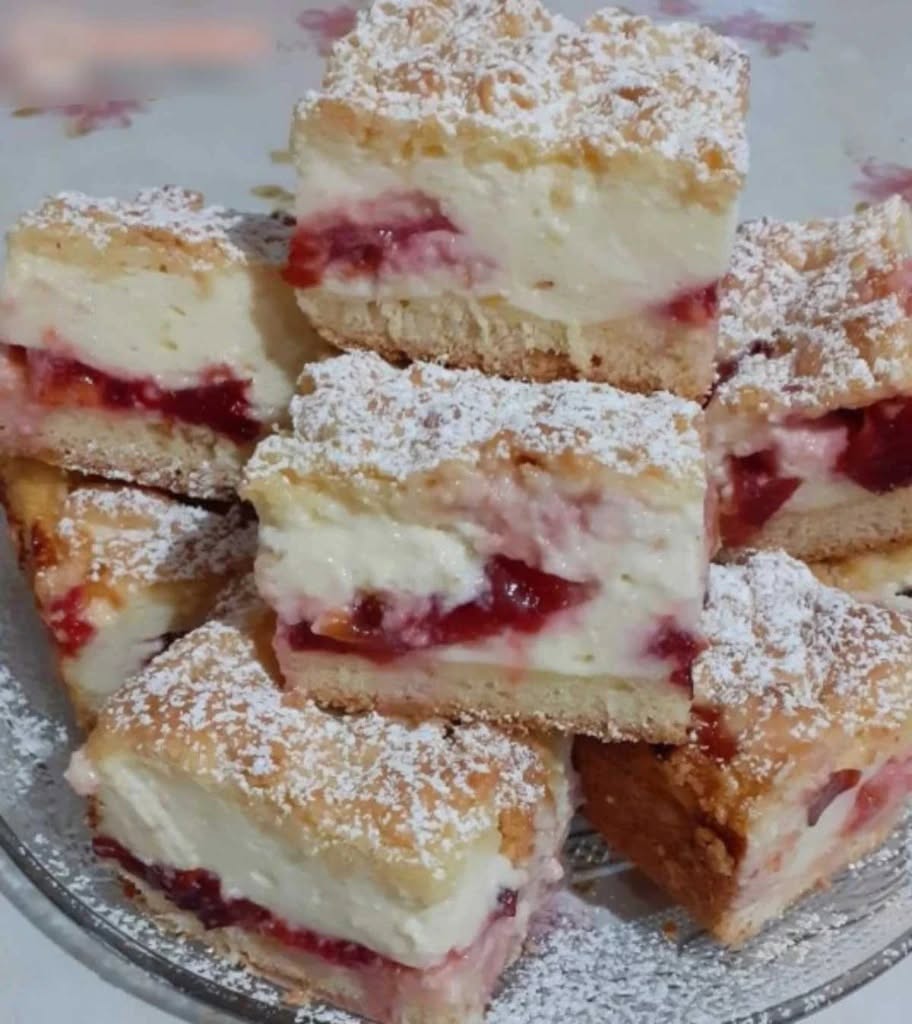
This article provides practical tips for preparing a delicious plum cake with sour cream. You will learn how to properly prepare the dough, what ingredients to use, and how to achieve the perfect result. With these tips, you can enjoy a delightful dessert that will please everyone.
1. Prepare the Plums
Thoroughly wash the plums, halve them, and remove the pits. If they are large, cut them into quarters. This ensures that the plums are evenly distributed in the cake, adding juiciness.
2. Preheat the Oven
Set the oven to 175–180 °C (350–360 °F) and line the baking tray or pan with parchment paper. Preheating the oven ensures that the cake bakes evenly and quickly.
3. Whisk the Eggs
Place the eggs in a bowl, add sugar and vanilla sugar, and whisk for about 2–3 minutes until the mixture lightens. This step creates an airy structure that contributes to the cake’s fluffy texture.
4. Add Sour Cream
Mix the sour cream into the whisked eggs and stir briefly. Sour cream adds a subtle tang and creamy flavor, making the cake more moist.
5. Add Oil
Gradually pour in neutral oil, such as sunflower oil. The oil ensures that the dough remains moist and does not dry out during baking.
6. Add Flour
Combine the flour with baking powder and a pinch of salt, then gradually add it to the batter. Mix only until combined to keep the dough light and fluffy.
7. Pour the Batter
Pour the batter into the prepared baking tray and spread it evenly. This ensures that the cake bakes uniformly.
8. Add the Plums
Distribute the plums over the surface of the batter, placing them cut side up and gently pressing them into the dough. This helps the plums bake better and release their juices.
9. Sprinkle with Cinnamon
You can sprinkle the plums with cinnamon, which will add a pleasant aroma to the cake. If the plums are very tart, add a bit of sugar to balance their flavor.
10. Prepare the Crumble
In a bowl, combine cold butter with flour and sugar, mixing with your fingers until a crumbly texture forms. The crumble adds a crunchy topping and excellent flavor to the cake.
11. Sprinkle the Surface
Evenly sprinkle the crumble over the plums and bake at 175–180 °C (350–360 °F) for about 35–40 minutes. The exact baking time depends on the size of the pan and the oven.
12. How to Check if It’s Done?
Insert a toothpick into a part of the cake without fruit. If it comes out clean, the cake is baked. This simple test is effective.
13. Let It Cool
After baking, let the cake rest for a while, then transfer it to a wire rack or allow it to cool in the pan. This preserves its structure and flavor.
14. Why Is the Cake So Moist?
Sour cream provides a subtle tang and creamy flavor, preventing the cake from drying out quickly. This helps the cake retain its moisture for several days.
15. What Type of Sour Cream to Use?
Regular sour cream with a higher fat content is ideal. Too runny sour cream can alter the dough’s consistency and affect the final result.
16. Fresh Plums
Ripe but still firm plums are best. Overripe plums will release too much juice, which can affect the cake’s texture.
17. Frozen Plums
You can also use frozen plums without fully thawing them. However, expect slightly longer baking times.
18. Canned Plums
Canned plums are suitable as well, but be sure to drain them thoroughly to avoid excess moisture in the batter.
19. Crumble-Free Variation
You can omit the crumble entirely and simply dust the surface of the cake with powdered sugar after baking. This results in a simpler dessert.
20. Cottage Cheese Variation
You can add cottage cheese to the cake. Mix 500 g of cottage cheese with 80 g of sugar and spread it over the batter before adding the plums.
21. Plums and Poppy Seeds
Plums pair excellently with poppy seeds. You can add 50–70 g of ground poppy seeds to the batter for an interesting flavor.
22. Cinnamon Crumble
You can add 1/2 teaspoon of cinnamon to the crumble, which will give the cake a wonderful aroma.
23. Nut Variation
Add chopped walnuts, ground almonds, or hazelnuts to the crumble for extra crunch and flavor.
24. Plums and Walnuts
A great combination is to add about 50 g of chopped walnuts to the batter.
25. Almond Flakes
Before baking, sprinkle the surface of the cake with almond flakes. You can also add a bit of grated coconut to the batter, for example, 40 g.
26. Chocolate Variation
Add 2 tablespoons of cocoa powder to the batter for a chocolate plum cake. Chocolate and plums complement each other beautifully.
27. Lemon Zest
A little finely grated lemon zest adds freshness to the cake, while vanilla softens the flavor of the sour cream.
28. What Pan to Use?
Smaller trays work well, such as a 24 × 30 cm (9 × 12 inches) pan or a round pan with a diameter of 26 cm (10 inches). Each pan will affect the final height of the cake.
29. In a Round Pan
The cake will be taller, and baking may take about 40–50 minutes.
30. On a Large Tray
The cake will be shorter and bake faster, which is advantageous if you need to serve it quickly.
31. The Cake Is Too Wet
Common causes include too many plums, very juicy fruit, or underbaking. Allow the cake to bake for a few more minutes.
32. Plums Sink to the Bottom
You can lightly coat them in flour before adding them to the batter, which sometimes helps.
33. The Batter Is Too Thick
Add 2–3 tablespoons of milk to achieve the desired consistency.
34. The Batter Is Too Runny
Add one or two tablespoons of flour to thicken the batter.
35. The Cake Is Dry
It was likely in the oven for too long. As soon as it passes the toothpick test, remove it.